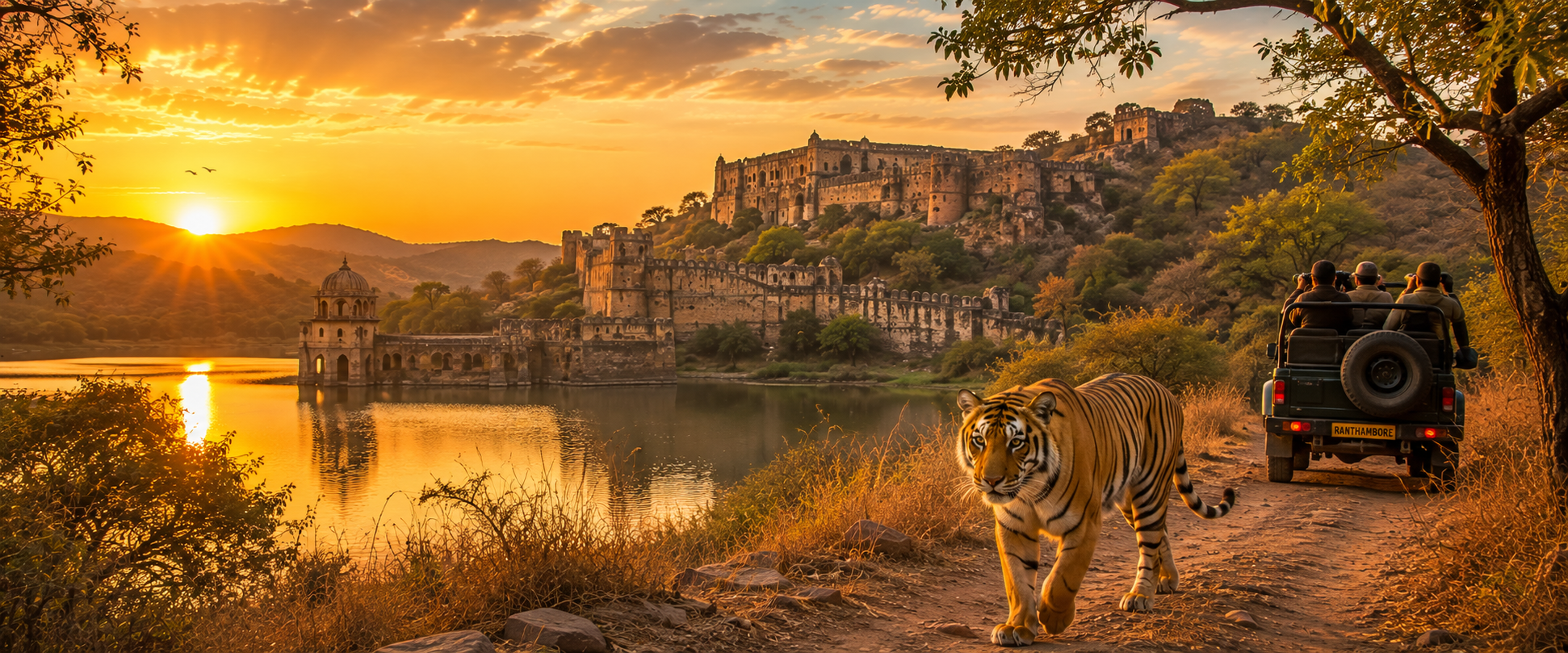
Jawai and Ranthambore offer different wildlife settings and should not be treated as interchangeable experiences. Route, season and the number of safari opportunities matter.
Understand that Jawai and Ranthambore are different
Ranthambore is centred on tiger safaris within a regulated national-park system, while Jawai is known for a distinctive leopard landscape of granite hills, villages and pastoral life. They offer different settings and should be chosen for the experience you want rather than treated as substitutes.
- Compare landscape and safari style.
- Consider how each fits the wider Rajasthan route.
- Keep wildlife expectations realistic.
Build the route around wildlife timing
Safaris work around fixed or locally defined time windows, often early in the morning and later in the afternoon. Hotel arrival, departure and inter-city driving should respect these timings rather than squeezing wildlife into a normal sightseeing schedule.
- Avoid arriving too close to a booked safari.
- Keep transfer days separate where possible.
- Allow early starts and recovery time.
Give yourself more than one opportunity
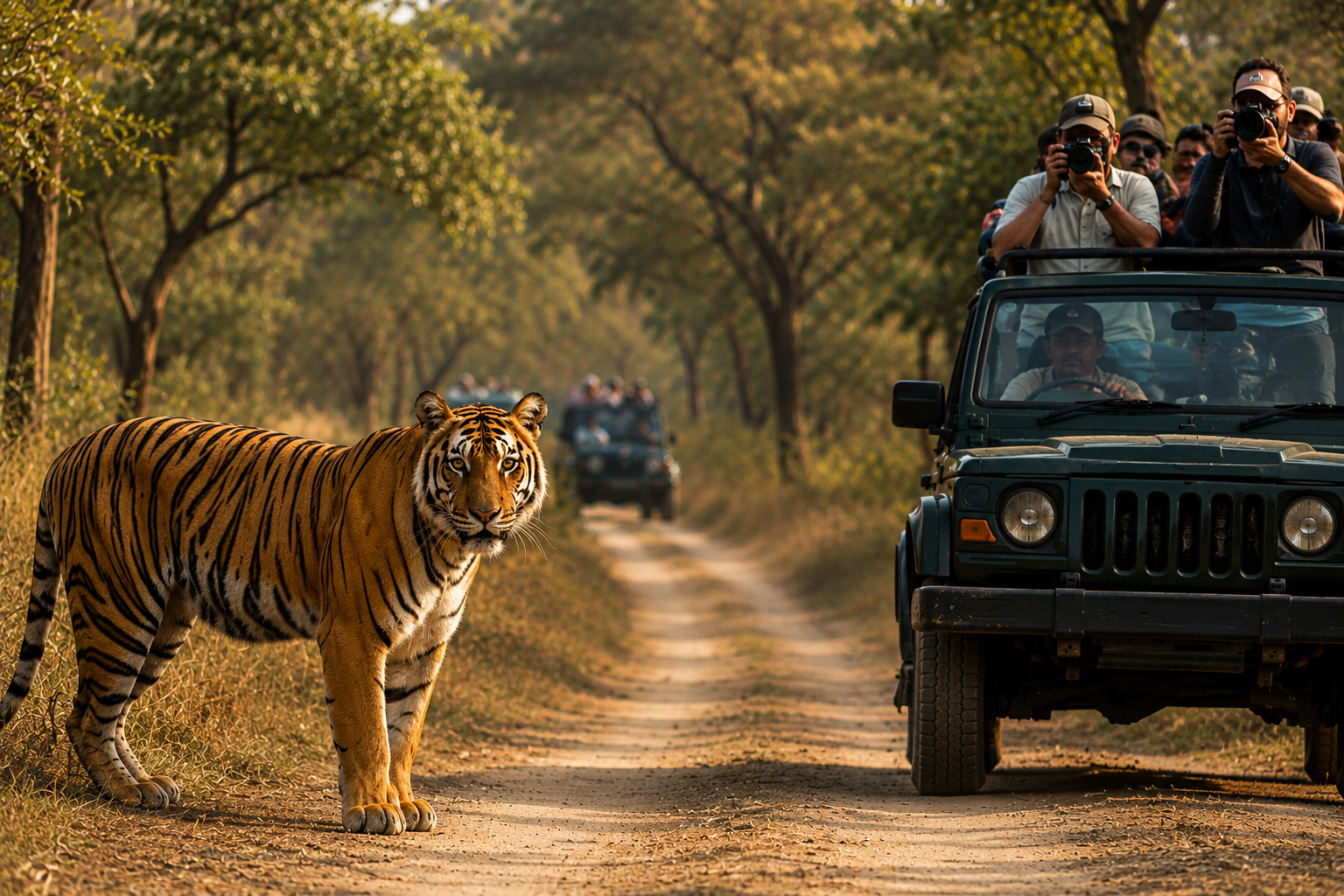
Wildlife sightings are never guaranteed. Travellers for whom wildlife is a major priority may prefer more than one safari opportunity rather than building the entire visit around a single drive.
- Treat sightings as nature, not an appointment.
- Consider multiple drives when time permits.
- Balance safari time with rest.
Check seasonal conditions
Weather influences animal movement, landscape character and traveller comfort. Park operations can also be seasonal or subject to local rules, so current conditions should be checked before finalising the itinerary.
- Confirm operating periods.
- Prepare for temperature differences between morning and afternoon.
- Carry appropriate sun, dust or cold-weather protection.
Choose accommodation for the safari schedule
A lodge or hotel should work with early departures and afternoon drives. Distance from the relevant meeting or entry point, meal timings and the ability to provide early breakfast or packed arrangements can matter more than being near a town centre.
- Check safari transfer arrangements.
- Confirm early-morning meal options.
- Allow time between the property and reporting point.
Connect wildlife with the wider Rajasthan journey
Ranthambore often connects naturally with Jaipur and eastern Rajasthan routes, while Jawai can work well between Udaipur and Jodhpur. Using geography intelligently reduces unnecessary road time.
- Place wildlife stops where the route supports them.
- Avoid backtracking only to add a safari name.
- Use arrival and departure cities to shape the sequence.
Keep photography expectations practical
Wildlife photography benefits from patience, appropriate equipment and realistic expectations. Vehicle position, light and animal movement cannot be controlled, and travellers should follow local rules rather than chasing a particular photograph.
- Protect equipment from dust.
- Respect guide and park instructions.
- Keep the experience enjoyable even without a headline sighting.
Leave room for the landscape itself
Both destinations offer more than a checklist sighting. Forest, granite hills, birdlife, rural scenery and the changing light can be part of the experience. A less rushed plan allows travellers to appreciate the setting as well as the wildlife.
- Include quiet time at the lodge or landscape.
- Observe smaller wildlife and birdlife.
- Let the destination remain worthwhile even when sightings vary.
Allow enough time for an experience that cannot be guaranteed on a clock.
The route should respect wildlife timing and seasonal conditions.