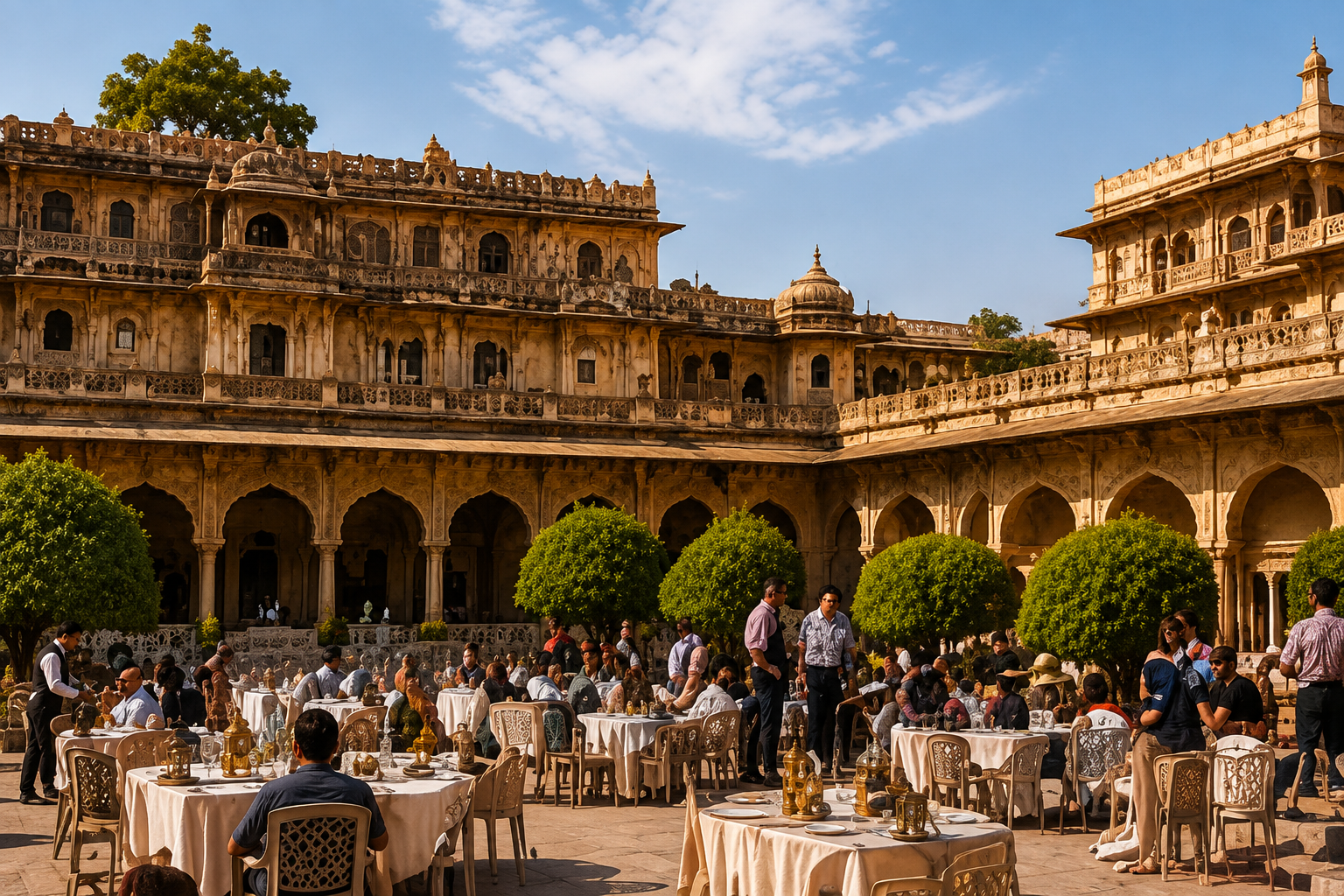
Different travellers need different levels of local assistance. Some want a standard sightseeing guide; others need language support or help around a specific interest such as architecture, crafts or photography.
Use guidance where it adds value
A guide is most useful when interpretation improves the experience. Rajasthan's forts, palaces, temples, neighbourhoods and craft traditions often become more meaningful when someone can connect what you are seeing with the history and local context.
- Use guides selectively rather than mechanically.
- Match the guide to the day's programme.
- Keep independent exploration time where appropriate.
Match language to the traveller
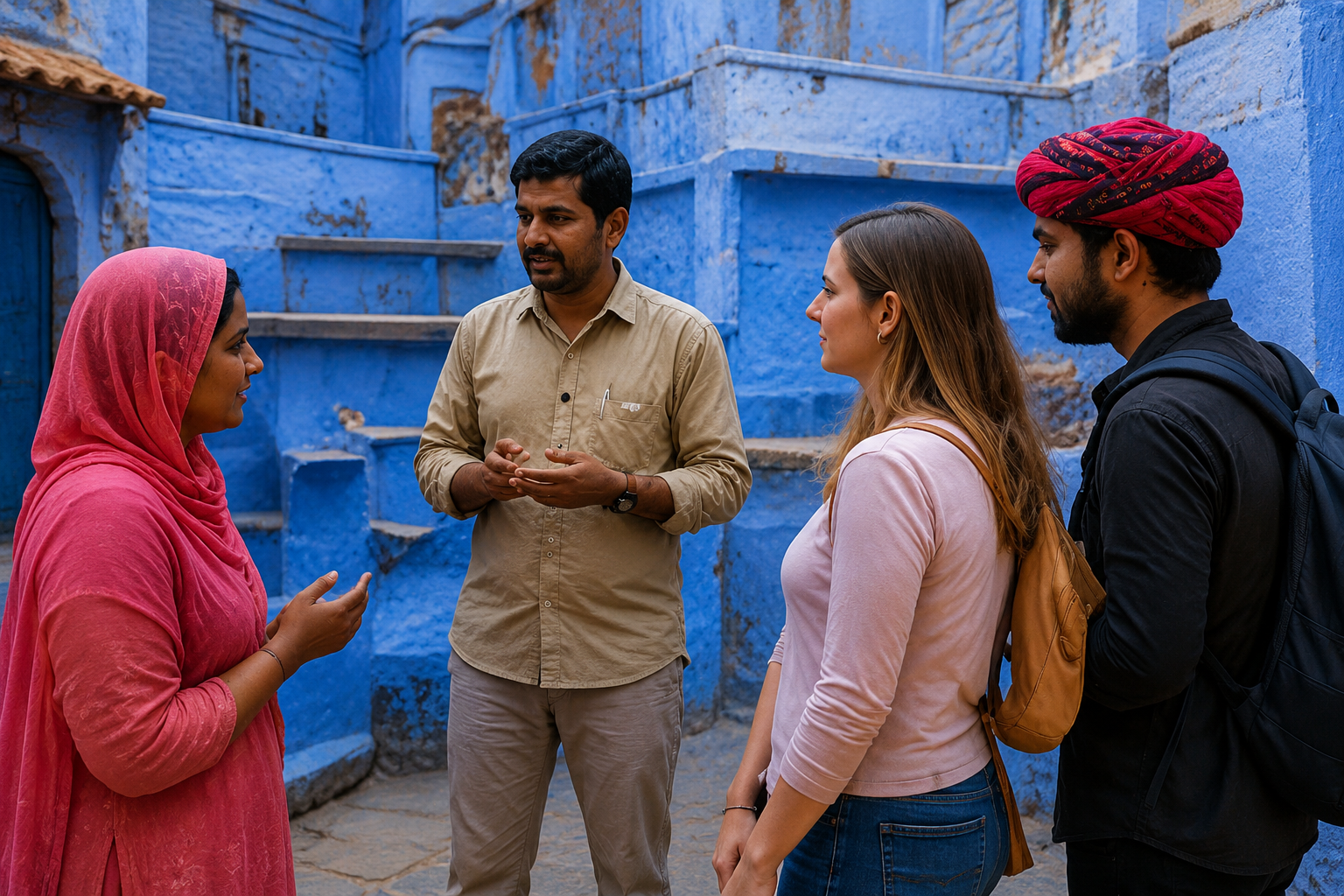
For international visitors, a comfortable language can change the quality of interaction. English guides are widely used, while other language requirements may need advance planning, especially during busy travel periods.
- Request language guides early.
- Confirm the language, not only 'foreign language guide'.
- Consider one guide across related sightseeing where practical.
Consider subject interests
Some travellers want more than a standard monument explanation. Architecture, photography, textiles, crafts, religion, food or history may justify a guide with stronger subject knowledge or a locally arranged specialist experience.
- Share interests before the trip.
- Avoid forcing specialist detail on travellers who prefer a lighter visit.
- Build subject-focused stops into the route.
Use local assistance for practical navigation
Assistance is not limited to formal guiding. Meeting travellers at a station, helping with hotel arrival, coordinating a vehicle, explaining a local process or supporting a group at a reporting point can remove friction from the journey.
- Identify where handovers may be confusing.
- Use assistance for larger groups and first-time visitors.
- Keep local contact details accessible.
Let guides complement the driver
A professional driver and a sightseeing guide have different roles. The driver manages safe transportation and route movement; the guide focuses on interpretation and the sightseeing experience. Treating them as interchangeable can reduce the quality of both services.
- Plan guiding separately from transport.
- Confirm meeting points and timings.
- Use licensed or appropriate local guides where required.
Avoid over-guiding the holiday
Continuous explanation can become tiring. Markets, lakeside walks, cafés and relaxed evenings may be better enjoyed independently. A balanced itinerary uses guidance for the parts where it genuinely contributes.
- Protect personal time.
- Do not turn every transfer into a guided programme.
- Ask travellers how much structure they prefer.
Coordinate tickets and timing
Local knowledge can help sequence busy monuments, understand opening hours and organise meeting points. It does not remove queues or restrictions, but it can make the day more orderly.
- Check opening days and timings.
- Allow security and ticketing time.
- Plan around sunrise, sunset or fixed-entry experiences when relevant.
Use one local team to connect the pieces
When transport, guides and local assistance are coordinated, travellers have fewer separate contacts to manage. This becomes particularly useful on multi-city routes, for groups and when plans need small adjustments during the journey.
- Keep responsibilities clear.
- Share itinerary changes with all relevant teams.
- Use local coordination as support, not as unnecessary supervision.
The right guide should match the way you want to explore.
Language and subject interest can matter as much as availability.